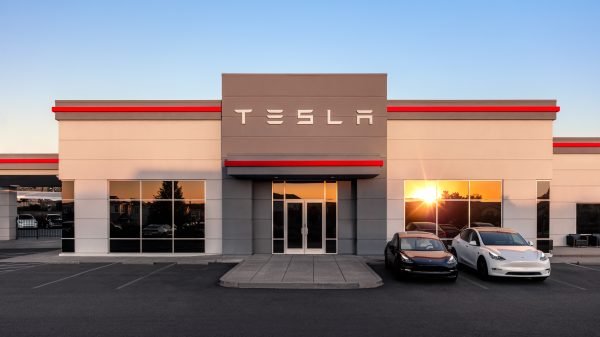




Tesla (NASDAQ: TSLA) successfully steered past Wall Street’s conservative estimates in its fiscal Q4 — delivering adjusted earnings of 50 cents a share against a forecasted 45 cents per share.
Despite the “fuzzy” outperformance, however, the firm’s underlying automotive business did show some signs of fatigue: vehicle deliveries crashed 16% year-on-year and annual revenue suffered its first decline in history.
Yet, surprisingly, the cooling demand for electric vehicles isn’t what’s cooling “investor sentiment” today.
Instead, the market is reeling from a massive spike in capital expenditure guidance.
Tesla now plans on spending over $20 billion this year – more than double the $9 billion it did in 2025.
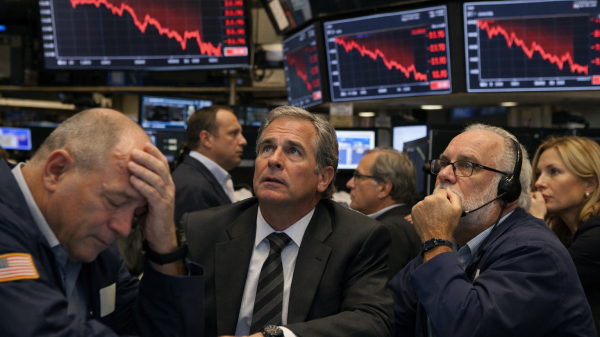
As UBS analyst Joseph Spak warned, this shift introduces profound “uncertainty”, sending TSLA stock down nearly 3.0% on January 29.
Why the physical AI pivot makes Tesla stock investors nervous
Wall Street analysts are increasingly wary of Tesla’s aggressive pivot from a traditional automaker to a “Physical AI” powerhouse.
On Thursday, billionaire Elon Musk confirmed the EV maker is killing off its legacy Model S and Model X to make room for “Optimus” humanoid robots, which essentially means he’s burning the ships behind him.
Barclays analyst Dan Levy described this as a “symbolic baton pass”, but it’s one that comes with a staggering price tag.
Investors who were comfortable with TSLA as a “high-growth” automaker now find themselves funding a speculative robotics venture.
This transition requires a complete retooling of infrastructure, which experts believe creates a huge “execution gap” where the certain cash flow of vehicle sales is replaced by the unproven potential of autonomous bots.
It’s this uncertainty that’s hurting Tesla stock today.
Big dreams, bigger risks: understanding capex conundrum
The scepticism isn’t just about what the money is being spent on, but the sheer velocity of the burn.
Doubling the capex budget to $20 billion in a single year is a high-stakes gamble that UBS analysts believe pronounces the overall risk profile of Tesla shares.
Unlike predictable scaling of an assembly line for a new car model, the path to a fully autonomous robotaxi fleet and mass-market humanoid robots is fraught with regulatory hurdles and technical “long-tail” problems.
As analyst Colin Langan of Wells Fargo noted, these timelines are notoriously “fuzzy”, and there’s no guarantee that the payoff will arrive before the current cash reserves are tested, leaving investors wondering if they are buying into a tech revolution or a money pit.
Verdict: practice caution in playing TSLA shares here
For those looking to play TSLA shares at the current price, a significant degree of caution is warranted.
The multinational is currently in a “valuation vacuum” where it must grow into its massive market cap before any further meaningful appreciation can happen.
While the “Musk Factor” often rewards believers who ignore traditional metrics, the reality of a 250+ price-to-earnings (P/E) multiple is becoming harder to ignore.
Between a “61%” drop in annual net income and the looming $20 billion spending spree, the safety margin has thinned considerably.
Unless Tesla proves its “Physical AI” transition can generate tangible margins beyond the hype of a conference call, the stock remains a high-beta bet on a future that’s still very much under construction.
The post EV weakness isn’t hurting Tesla stock today — THIS is appeared first on Invezz