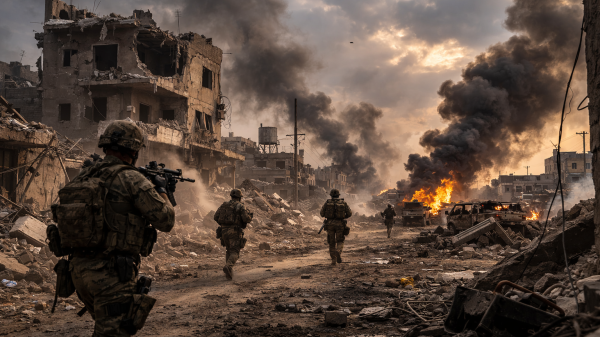






“I have lived in Dubai for the past 2 years, and it has been great. But when you see missiles flying, all other factors go out of the window. You want to rush to safety,” said Dan Hayes, a sports marketing executive.
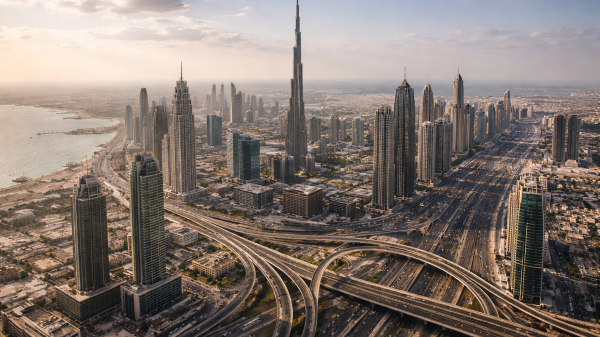
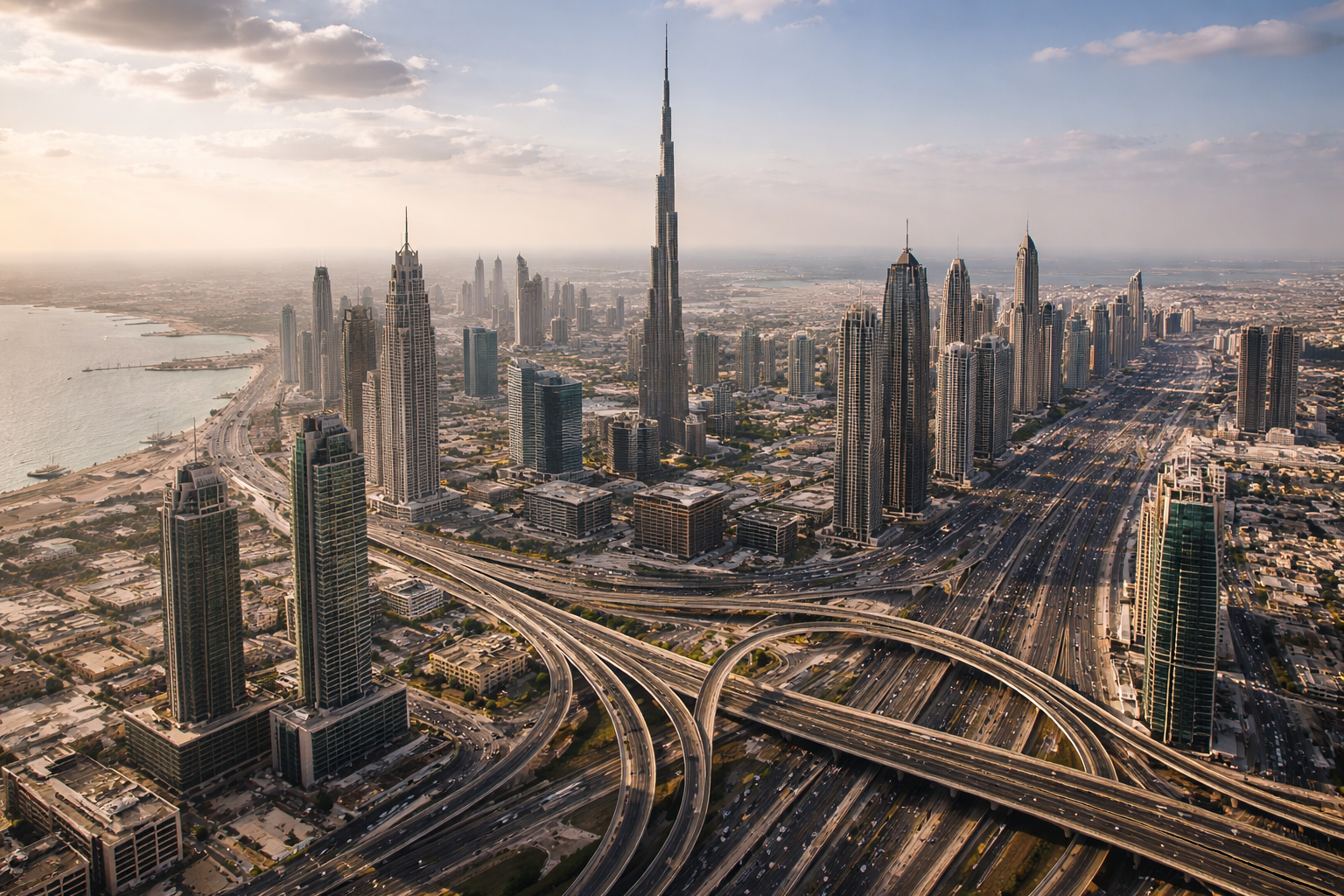
Dubai’s skyline — long a symbol of rapid growth and a haven for global capital — is facing a major stress test.
After years of historic gains, the emirate’s ultra-luxury and prime residential sectors are grappling with a sudden “wait-and-watch” sentiment as escalating tensions in the Middle East cast a shadow over investor confidence.
According to ANAROCK, Dubai recorded nearly AED 917 billion (about $250 billion) worth of real estate transactions in 2025 alone — the highest in its history.
Transaction volumes crossed 270,000 deals, reflecting strong investor participation and deep liquidity in the market, with residential real estate playing a major role in driving this momentum.
Approximately 200,000 residential transactions worth around AED 538 billion were recorded during the year.
Since 2021, residential property prices in Dubai have risen by roughly 60–75%, making it one of the strongest housing cycles globally in the post-pandemic period, ANAROCK said.
“This context is important because markets already experiencing strong expansion tend to respond to geopolitical shocks differently. In most cases, the initial impact is a slowdown in transaction activity rather than an immediate correction in prices,” said Dr Prashant Thakur, Executive Director and Head of Research & Advisory at ANAROCK Group.
What drove Dubai’s real estate boom?
In an interview with Invezz, Faisal Durrani, partner and head of research for the Middle East and North Africa at Knight Frank, had said the UAE government’s response to the pandemic played a crucial role in kickstarting the recent property boom.
“The UAE was among the world’s most vaccinated nations. There were even moments when it was the most vaccinated country globally,” he said.
“The pandemic also fast-tracked certain legislation that may already have been planned, including the introduction of a wide range of new residential visa options designed to attract and retain talent. These measures made it significantly easier for people to move to, live, and work in Dubai and across the UAE.”
Durrani also highlighted several structural advantages that continue to support demand.
“There are also softer factors that make Dubai and the UAE an attractive place to live, work and invest — the climate, safety and security, the rule of law, high-quality education, and world-class infrastructure. All these factors combined have helped make the market as successful as it is today,” he said.
Source: ANAROCK
Rising geopolitical tensions test investor confidence
Dubai’s real estate sector has previously faced questions over geopolitical risks, particularly during the long-running Israel–Palestine conflict.
However, the latest escalation is crucial as infrastructure in the UAE is itself being targeted, testing the emirate’s long-standing reputation as a safe economic hub in the region.
Iran has reportedly launched more than 1,000 drones and missiles toward targets in the UAE, damaging infrastructure, including Dubai International Airport and the Fairmont Hotel, along with residential and tourist areas.
Explosions were also reported near Zayed International Airport in Abu Dhabi on Thursday.
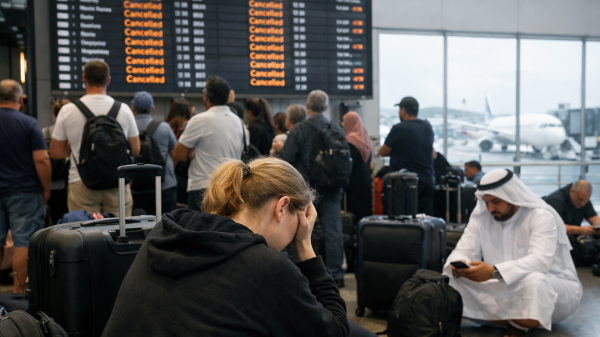
Airport authorities advised passengers not to travel unless they had confirmed bookings and had received direct notifications from their airlines.
In a post on X, the airport said access would be restricted strictly to passengers holding confirmed bookings.
Against such a backdrop, questions about the potential psychological impact they will have on global investors are bound to emerge.
What would investors do?
Dubai’s real estate market depends heavily on international investors and expatriate residents.
Any perception of rising geopolitical risk can prompt investors to temporarily adopt a wait-and-watch approach.
Such sentiment shifts typically affect off-plan purchases and speculative investments first, as these segments tend to be more sensitive to changes in market confidence, Thakur said.
Reports suggest that buyers who have already booked homes may seek to renegotiate terms or secure larger discounts, while prospective purchasers could delay investment decisions until the situation stabilises.
Some investors may also redirect capital toward premium residential projects in India.
“In the mid-market segment (properties in the $330,000 to $880,000 range), negotiations are expected to intensify, with end-users seeking better deals and investors becoming more conservative about new commitments,” Amit Goenka, CMD of Nisus Finance, said in a report cited by Hindustan Times.
“High-value transactions are therefore likely to remain muted for some time, as high-net-worth investors may defer large-ticket purchases,” he added.
Tourism decline to hit short-term rentals
Tourism represents another potential transmission channel for the broader economic impact.
The Middle East tourism industry is estimated to be worth around $367 billion annually, and prolonged geopolitical tensions could weigh on travel sentiment across the region.
Industry estimates suggest instability could result in 23–38 million fewer visitors, potentially translating into a $34–56 billion decline in tourism revenues.
“If that scenario unfolds, the immediate impact would likely be felt in short-term rental apartments, hospitality assets and retail properties located in tourist-heavy districts,” Thakur said.
However, he noted that Dubai’s residential real estate demand is not driven solely by tourism.
“The city’s large expatriate population continues to provide a stable base of housing demand,” he said.
A market familiar with cycles
Dubai’s real estate sector has gone through multiple boom-and-bust cycles over the past two decades.
During the 2008 global financial crisis, property prices fell by nearly 50–60%, and the market took roughly six to seven years to fully recover.
Another correction occurred between 2014 and 2019, when prices declined by around 25–30%, largely due to lower oil prices and an oversupply of housing.
More recently, the COVID-19 pandemic caused only a brief disruption, with the market recovering within 12–18 months.
Source: ANAROCK
These cycles highlight an important feature of Dubai’s property market: while corrections can be sharp, the sector has historically demonstrated a strong ability to rebound once investor confidence stabilises.
“The current geopolitical tensions will undoubtedly introduce a degree of caution among investors,” Thakur said.
“Transaction volumes may moderate in the near term as buyers assess the evolving risk environment. Yet Dubai’s position as a global financial and lifestyle hub — combined with its diversified investor base and policy flexibility — continues to provide strong structural support to its real estate sector.”
“In that sense, the real question may not be whether geopolitical tensions will affect Dubai’s property market — they almost certainly will in the short term. The more relevant question is how quickly investor confidence returns once the geopolitical environment stabilises,” he added.
“If history is any guide, Dubai’s real estate market has repeatedly demonstrated that it can recover faster than many global property markets.”
Tips for investors navigating uncertainty
Gaj Properties has outlined several strategies for real estate investors navigating the current landscape.
The firm recommends prioritising properties with strong locations, solid infrastructure, and reputable developers, while closely monitoring broader market sentiment.
“Stay updated on geopolitical developments, but avoid emotional decision-making,” the firm said.
It also advised investors to adopt a long-term perspective, noting that short-term volatility often smooths out over multi-year holding periods.
Working with experienced advisors and diversifying across both residential and commercial segments can also help balance risks.
The post Will Dubai’s $250B property market survive the Middle-East conflict? appeared first on Invezz