










Vale announced its operational data for the fourth quarter of 2025 on Tuesday, which received a broadly positive reception among market analysts amid a rally in equities at the start of the year (seasonally, one of the weakest months).
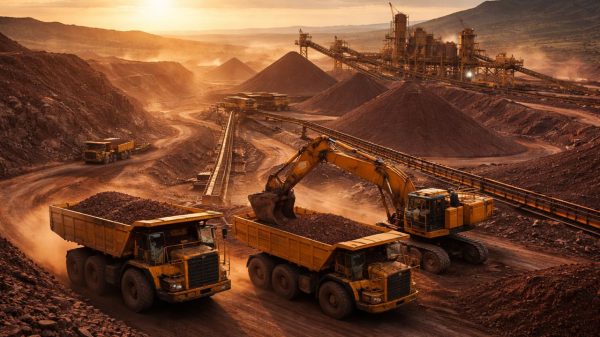
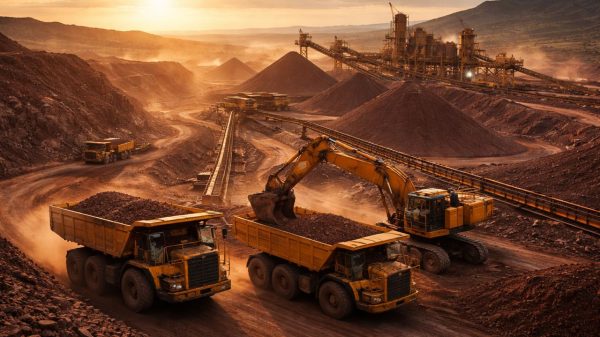
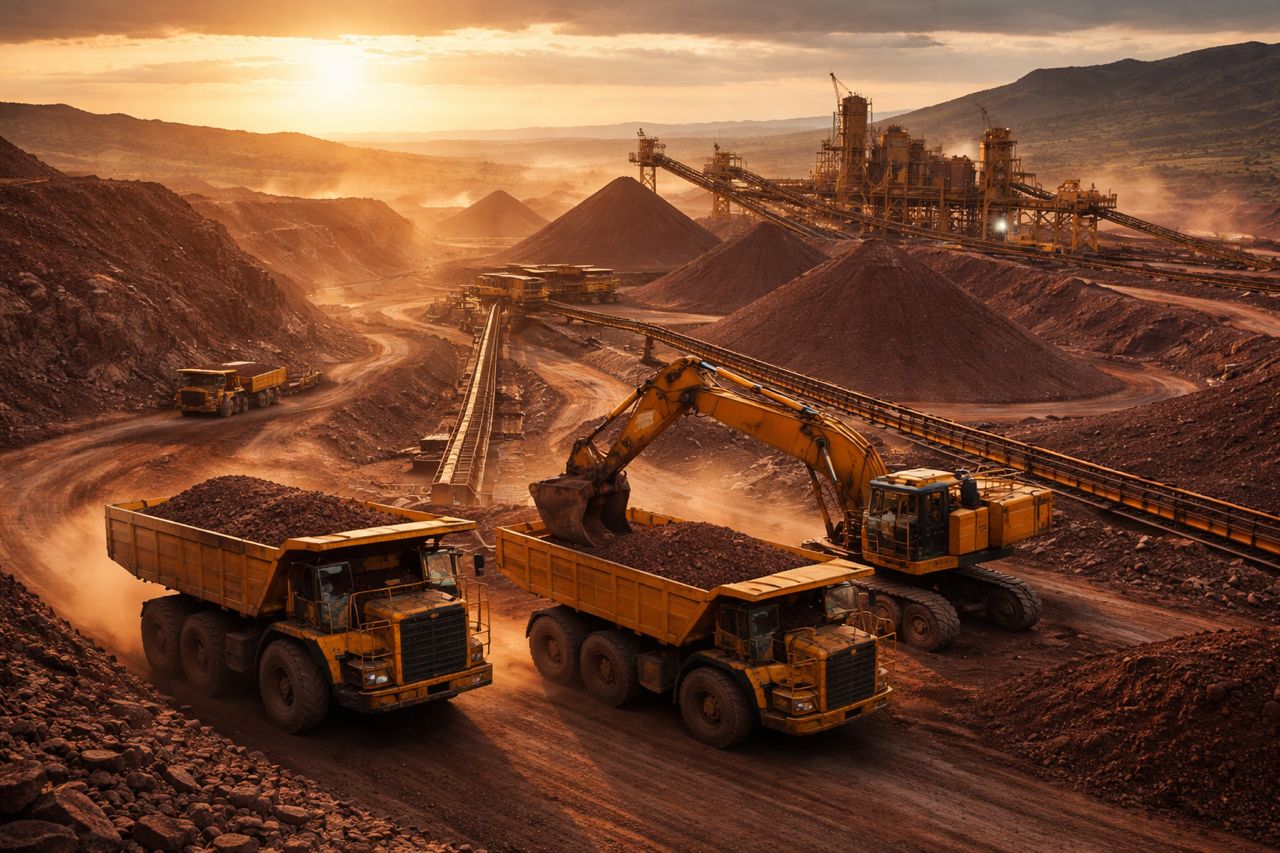
According to local media outlet InfoMoney, Vale’s total iron ore production for the calendar year of 2025 was 336.1 million tons, which represents a 2.6% increase from 2024, despite the impacts of facilitating export initiatives.
For the first time since 2018, Vale outpaced its primary rival in the Pilbara, the Australian group’s primary production hub.
Vale was able to reclaim its position as the largest iron ore producer in the world thanks to Rio Tinto’s production of 327.3 mt.
For Vale, which lost its top spot in 2019 following the collapse of its Brumadinho dam in Minas Gerais, the achievement holds symbolic significance.
The tragedy, which cost hundreds of lives and forced the company to completely reevaluate projects and safety procedures, had a devastating impact on production for several years.
Gradual recovery after Brumadinho
Vale’s output has increased substantially in recent years, closing the gap with Rio Tinto.
Gustavo Pimenta, the president of Vale, has frequently emphasised this recovery trajectory and stated that the business would reclaim its top spot in iron ore.
The most recent statistics indicate that the method is working. In the fourth quarter, iron ore production increased by almost 6% year over year, just exceeding XP Investimentos’ projections.
Due to increases at Vargem Grande and Capanema, as well as higher volumes from Brucutu, shipments of iron ore fines rose 7% over the same period in 2024.
On the other hand, pellet sales volumes decreased by 10% annually.
Copper and nickel add momentum
Outside of iron ore, a firm performance in base metals was noted by analysts. XP pointed out the strong copper production and copper sales, which grew 6% on the year.
These gains came on the back of improved production at Salobo, which achieved record volumes, as well as Sossego.
Reflected in increases of US$1,185 per ton for every quarter in realised copper prices on the London Metal Exchange reference prices.
JPMorgan described the quarter as strong across each of its segments.
Releasing data for iron ore and copper production for the first quarter of 2023, the bank said the output of both commodities was at its highest since 2018, at 336 million tons and 382,000 tons, respectively.
Year-on-year growth was strong for nickel production as well, bolstered by Brazil, where production hit a record high, resulting in the strongest output year to date since all of 2022.
Goldman Sachs reiterated similar observations, stating that iron ore production in the fourth quarter was widely consistent with expectations, while copper output outperformed both its estimates and the market consensus by 14% to 19%.
Likewise, nickel production was approximately 5% above expectations.
Valuation, risks and outlook
After several years of poor performance, Goldman Sachs contended that the steady recovery in base metals might lead investors to reevaluate Vale.
The bank noted that Serra Norte’s depletion remained high in 2025, at about 10%, despite gains elsewhere, while highlighting record yearly production levels during the previous four to eight years.
After a robust increase in 2025, Vale’s shares have increased 17% so far this year.
Goldman claims that increased commodity prices, better operational execution, and strong capital flows into Brazil are all contributing factors to the rally.
Vale has outpaced peers by 20% so far this year and by 30% in 2025.
With the stock trading at 11% of annual free cash flow on a spot basis, as opposed to 5% for competitors Rio Tinto and BHP, the bank finds Vale’s valuation to be somewhat appealing.
Additionally, a capital allocation plan with reduced merger and acquisition risk and enhanced operational performance was mentioned.
But there are still dangers. Iron ore prices may have already peaked in the current cycle, according to Goldman Sachs, which projects an 8% decline by the end of 2026.
In spite of this, Goldman continues to advise buying Vale’s ADRs, with a target price of US$13.80. BBI advises outperforming with a US$15 target, while JPMorgan has an overweight rating.
While acknowledging an improved short-term outlook for the company, XP Investimentos reaffirmed its neutral position, noting prospects of lower iron ore prices beyond the restocking period.
The post Brazil’s Vale reclaims iron ore lead as production surge bolsters investor confidence appeared first on Invezz