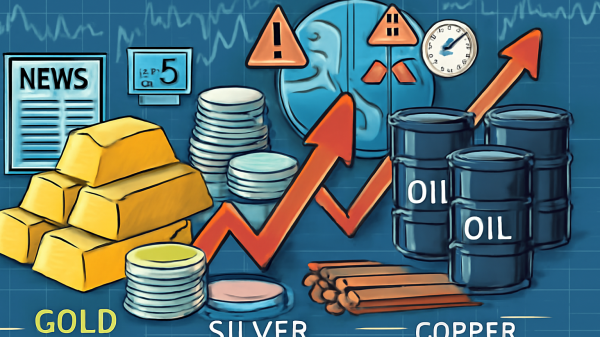












Gold and silver prices surged on Friday as investors resorted to lower-level purchases after the precious metals had fallen sharply in the previous session.
Despite rising on Friday, oil prices were still on track for their first weekly drop since February 9, following the extension of a pause in US President Donald Trump’s attacks on Iran’s energy plants.
However, the market remained cautious about the viability of the ceasefire.
Meanwhile, among base metals, aluminium, copper and zinc contracts on the London Metal Exchange rose as investors absorbed developments on the supply side.
Gold surges
Despite a rise on Friday due to dip-buying, gold prices are still on track for a fourth consecutive weekly loss.
The gains were limited by increasing anticipation of US rate hikes, which has intensified amid inflation worries stemming from the Iran war.
At the time of writing, the COMEX gold contract was at $4,556.62 per ounce, up 3.4%, while silver was 4.5% higher at $70.963 per ounce.
Despite Trump extending the deadline for Iran to reopen the Strait of Hormuz, oil prices remained above $110 per barrel.
This extension followed Tehran’s rejection of a 15-point US proposal aimed at ending the fighting.
The conflict, now spanning four weeks and escalating across the Middle East, is impacting the global economy.
This spread has led to sharp increases in energy and fertilizer costs, intensifying concerns about inflation.
The surge in inflation has consequently altered the Federal Reserve’s stance, pointing towards possible rate hikes.
Such hikes usually negatively affect gold prices by raising the opportunity cost of owning the non-yielding asset.
Prior to the outbreak of the war, traders anticipated two US rate cuts in 2026.
However, data from CME Group’s FedWatch Tool now indicates that traders have completely discounted the possibility of any US rate cuts occurring in 2026.
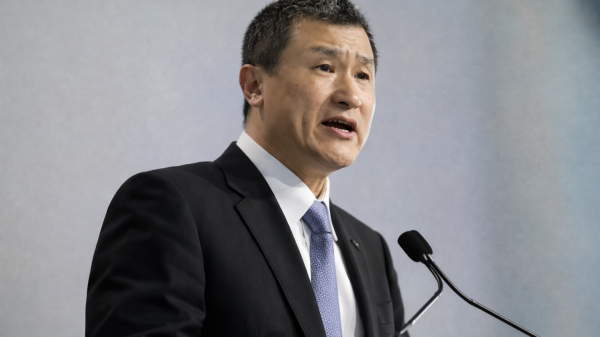
“However, the price decline of over 15% since early March is likely also due to the extremely sharp price increases at the start of the year,” Barbara Lambrecht, commodity analyst at Commerzbank AG, said.
Gold, in fact, had seen a significant rise, peaking at 30% in January.
Oil extends gains, but set for weekly decline
Despite rising on Friday, oil prices are poised for their first weekly drop since February 9.
This decline comes as investors remain cautious about the possibility of a ceasefire in the month-old conflict, even after US President Trump extended a suspension of attacks on Iran’s energy facilities.
The Brent crude oil on Intercontinental Exchange was last at $111.10 per barrel, up 2.9%, while West Texas Intermediate was 3.5% higher at $97.78 a barrel.
Since the US and Israel launched strikes against Iran, the Brent benchmark has soared 53%; however, it registered a 1.2% decline this week.
Similarly, WTI, which has gained 45% since the conflict began, saw a weekly drop of 1.3%.
Under Commerzbank AG’s primary projection, which assumes the Middle East war’s conclusion in May, the price of Brent crude is forecast to decrease to $90 per barrel by the close of the second quarter.
“Even if shipping through the Strait of Hormuz were to normalize, it is feared that oil production in the region will only resume slowly due to longer ramp-up times in oil production and damage to production facilities,” Lambrecht said.
Another factor pointing to higher oil prices than previously expected even after the war ends is that the world will be facing a severe inventory shortage, as production in the region had to be significantly scaled back due to the blockade of exports.
The US has intensified its military presence in the Middle East, deploying thousands of troops as Trump contemplates a ground invasion to capture Iran’s strategic Kharg Island oil center.
Simultaneously, Trump has also extended the deadline for Iran to reopen the Strait of Hormuz, warning that failure to comply will lead to the destruction of Tehran’s energy infrastructure.
The conflict has severely impacted global oil supply, removing approximately 11 million barrels per day.
The International Energy Agency has characterized this crisis as more severe than the two oil shocks of the 1970s combined.
Base metals rise
Friday’s session for base metals resumed with increased strength, as the markets continue to process various developments, including a rush of supply-side news and changing geopolitical expectations.
The aluminium market is experiencing a significant risk premium, evidenced by Japanese buyers agreeing to the highest quarterly premiums in over ten years.
This tightness in the physical supply is due to the war in Iran, which has disrupted supply chains and severely limited availability from a region responsible for almost a tenth of the world’s aluminium output.
“Spot deals at even higher premiums underscore the strain on physical supply,” Neil Welsh, head of metals market at Britannia Global Markets, said in an emailed commentary.
“Aluminium has been one of the few metals to post consistent weekly gains this month as the effective closure of the Strait of Hormuz keeps the market on edge.”
Despite a recovery earlier in the week driven by optimism about diplomatic efforts potentially averting a deeper economic slowdown, copper is currently trading with mixed signals.
“The market remains highly sensitive to geopolitical headlines and the lack of clarity around US Iran negotiations is keeping conviction low.
The three-month copper contract on LME was at $12,192 per ton, up 0.5%, while the aluminium contract was 1.4% higher at $3,294.50 per ton.
The post Commodity wrap: Bullion jumps on dip-buying; Brent above $111 appeared first on Invezz